Reverse Shoulder Replacement
Reverse Shoulder Replacement is an advanced orthopedic procedure designed to relieve severe shoulder pain and restore arm movement in patients with complex shoulder conditions, particularly those involving irreparable rotator cuff damage. This innovative surgery reverses the normal anatomy of the shoulder joint, allowing other muscles, especially the deltoid muscle, to compensate for a damaged rotator cuff and restore shoulder function.
For patients suffering from chronic pain, weakness, and limited shoulder mobility, reverse shoulder replacement can provide significant improvement in daily activities and overall quality of life.
What is Reverse Shoulder Replacement?
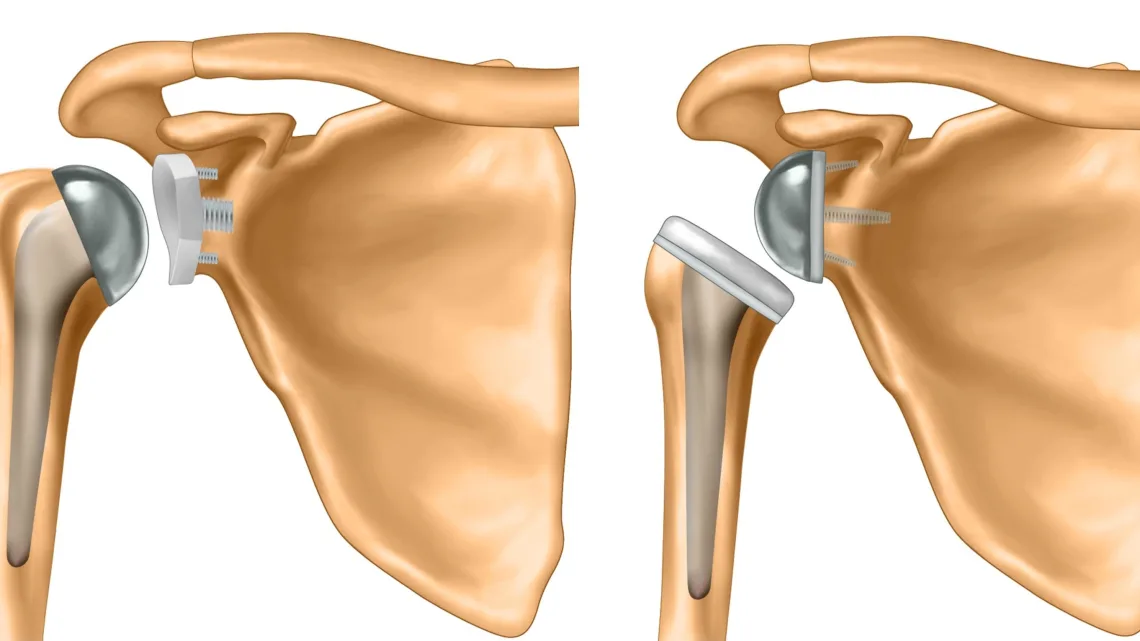
Reverse Shoulder Replacement, also known as Reverse Total Shoulder Arthroplasty (RTSA), is a specialized type of shoulder replacement surgery in which the normal ball-and-socket structure of the shoulder joint is reversed.
In a healthy shoulder:
- The ball is located at the top of the upper arm bone (humerus).
- The socket is part of the shoulder blade (scapula).
In reverse shoulder replacement:
- A metal ball component is attached to the shoulder blade.
- A socket component is attached to the upper arm bone.
This design allows the deltoid muscle to power shoulder movement when the rotator cuff is severely damaged or nonfunctional.
Who Needs Reverse Shoulder Replacement?
Reverse shoulder replacement may be recommended for patients experiencing:
- Severe shoulder pain that limits daily activities
- Massive or irreparable rotator cuff tears
- Rotator cuff tear arthropathy
- Advanced shoulder arthritis with rotator cuff damage
- Shoulder weakness and loss of arm elevation
- Failed previous shoulder replacement surgery
- Complex shoulder fractures in older adults
- Chronic shoulder instability
Conditions Treated with Reverse Shoulder Replacement
- Rotator Cuff Tear Arthropathy
A combination of severe rotator cuff damage and shoulder arthritis that causes pain and loss of function. - Massive Rotator Cuff Tears
Large tendon tears that cannot be repaired through conventional surgical techniques. - Advanced Shoulder Arthritis
Severe joint degeneration causing chronic pain and stiffness. - Complex Proximal Humerus Fractures
Certain shoulder fractures, especially in elderly patients, may be treated effectively with reverse shoulder replacement. - Failed Shoulder Replacement
Revision surgery may be performed when a previous shoulder replacement no longer functions properly.
Benefits of Reverse Shoulder Replacement
- Significant Pain Relief: Most patients experience substantial reduction in chronic shoulder pain.
- Improved Arm Movement: Allows patients to lift their arm more effectively despite rotator cuff damage.
- Enhanced Shoulder Function: Improves the ability to perform daily activities such as dressing, grooming, and reaching overhead.
- Increased Independence: Restored mobility can greatly improve quality of life and self-care.
- Long-Term Durability: Modern implants are designed for long-lasting performance and stability.
- Improved Strength: The procedure allows the deltoid muscle to compensate for the damaged rotator cuff.
The Reverse Shoulder Replacement Procedure
Preoperative Evaluation
Before surgery, a comprehensive assessment is performed, including:
- Medical history review
- Physical examination
- X-rays
- CT scan or MRI
- Blood tests
- Anesthesia evaluation
Surgical Procedure
- The patient receives anesthesia.
- An incision is made over the shoulder.
- Damaged bone and arthritic tissue are removed.
- A metal ball component is attached to the shoulder blade.
- A socket component is placed on the upper arm bone.
- The joint is tested for stability and movement.
- The incision is closed, and recovery begins.
The procedure typically takes 1.5 to 3 hours depending on the complexity of the case.
Recovery After Reverse Shoulder Replacement
Immediate Recovery
- The arm is usually supported in a sling.
- Pain management helps ensure comfort.
- Gentle movements may begin soon after surgery.
Rehabilitation Phase
- Physiotherapy is essential for optimal recovery.
- Exercises focus on restoring mobility and strengthening the shoulder.
- Gradual return to normal activities is encouraged.
Long-Term Recovery
Most patients experience noticeable improvements within a few months, while full recovery may take 4 to 6 months or longer depending on individual healing and rehabilitation.
Risks and Complications
Although reverse shoulder replacement is generally safe, potential risks include:
- Infection
- Blood clots
- Nerve injury
- Implant loosening
- Shoulder dislocation
- Fracture around the implant
- Stiffness
- Persistent pain
- Need for revision surgery
Experienced orthopedic surgeons take extensive precautions to minimize these risks and optimize outcomes.
Why Choose Reverse Shoulder Replacement?
Reverse shoulder replacement is often the best solution for patients with severe rotator cuff damage and advanced shoulder arthritis because it offers:
- Reliable pain relief
- Improved arm elevation and shoulder function
- Enhanced quality of life
- Durable implant technology
- High patient satisfaction rates
- Effective treatment when conventional shoulder replacement is not suitable